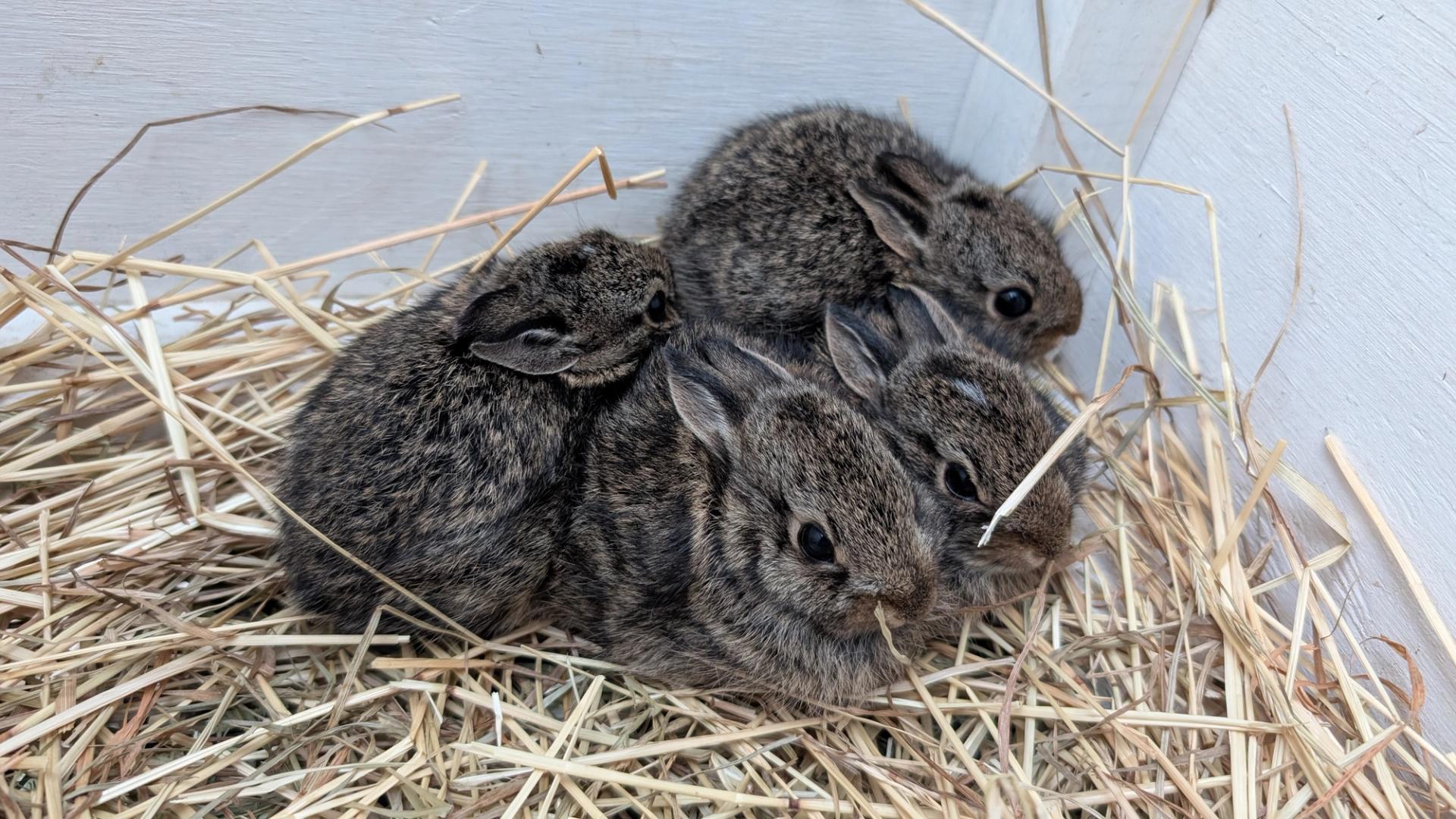
As spring unfolds, baby bunnies are bouncing about — and they need your help! The Dane County Humane Society’s Wildlife Center is receiving a lot of calls about Eastern Cottontail rabbits as people are finding more nests filled with bunnies.
📣 What you should know: DCHS wants to remind the public that just because their mother isn’t nearby doesn’t mean she’s not coming back for them. It’s normal for mama to leave the babies alone for most of the day to not attract predators, and then come back at dawn and dusk to feed them. So if you find a nest of these cuties in your backyard or nearby, don’t report them as abandoned.
‼️ Here’s why: Eastern Cottontail kits are incredibly challenging to rehabilitate. Their best chances of survival are with their mothers. These wild kits are extremely sensitive to stress and require specialized formula and intensive care from licensed wildlife rehabilitators. DCHS has admitted over 130 cottontails this year alone.
🤗 How you can help: Dogs, free-roaming cats, and human disturbance of nests are the most common threats. Here are the DCHS’s Wildlife Center’s tips on how to keep Madison’s bunnies safe:
- Check your yard or garden for nests. Their nests can usually be found along the edge of a fence or building, and in the middle of the yard. Their nests are usually lined with rabbit fur and patches of dead grass. If you see an adult rabbit returning at the same time each morning and night, that might be the mother.
- Supervise pets when outdoors. Keep cats indoors or offer on-leash time. To further shield pets from the nest, place a laundry basket over the nest and weigh it down with bricks or rocks while your pet is outdoors, and then remove it once your furry friend is safely indoors so mama can find her babies.
- Temporarily pause your yard work if you find a nest. Avoid mowing, spraying herbicides, or working near the nest. Kits become independent and leave the nest at four weeks of age, so they’ll be moving on and bouncing about Madison in no time!
If you find a sick, injured, or orphaned rabbit, please contact DCHS’s Wildlife Center at (608) 287-3235.